

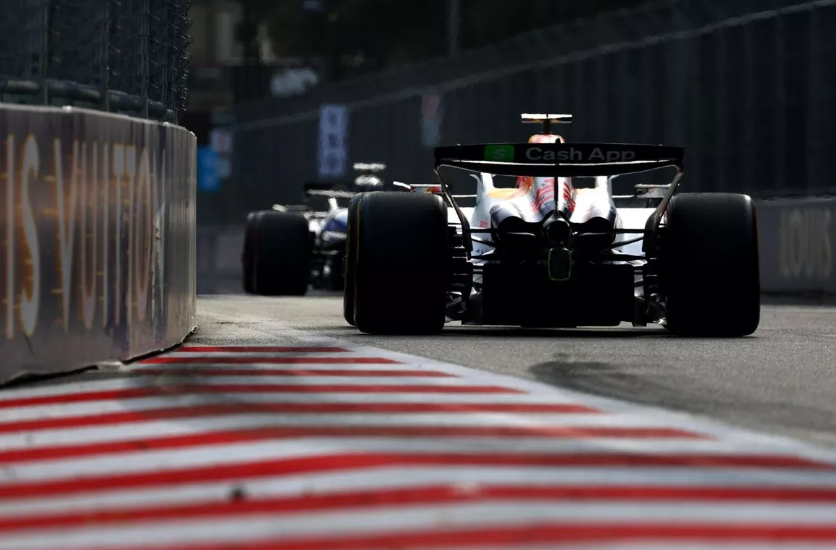
Azerbaijan – The Drag Reduction System (DRS), a controversial fixture in Formula 1 for 15 seasons, was designed to prevent processional races. However, in 2025, specifically at low-downforce tracks like Monza and Baku, the system’s efficacy has dropped to new lows, contributing to unexpectedly processional racing. This failure is a direct, yet unintended, consequence of the current technical regulations.
The Aerodynamic Paradox: Small Wings, Small DRS Effect
The root cause of the problem lies in the design philosophy of the current F1 cars and the resulting low-downforce aero packages used at high-speed venues.
- Dominance of the Floor: The 2022-era technical regulations mandate that a massive proportion of a car’s performance now comes from the underfloor and ground effect.
- Shrinking Rear Wings: As Mercedes’ Trackside Engineering Director Andrew Shovlin confirmed, the heavy reliance on the floor has “been driving down the size of rear wings.” Teams are using wings with lower angles-of-attack and shallower camber to achieve greater straight-line speed.
- The Consequence: Because the rear wings are physically smaller and inherently more efficient (lower drag) even when closed, the primary function of DRS—which is to reduce frontal area and decouple the wing elements—has a diminished impact. There is simply less drag to eliminate, making the speed gain from DRS minimal and thus rendering it “distinctly ineffectual” at these circuits.
DRS vs. The New Aero Era
DRS’s effectiveness has always been inversely proportional to a car’s base drag; the lower the drag of the wing, the less pronounced the DRS speed boost.
- The current cars were intended to create less dirty air (wake effect), allowing drivers to follow more closely in corners.
- However, this same reduced wake has simultaneously cut away much of the slipstream (tow) effect on the straights.
- The combination of a weaker natural slipstream and a significantly weakened DRS effect has removed the necessary overtaking assist, creating the slow races seen at the low-drag circuits in 2025.
Looking Ahead: The 2026 Override Mode
While DRS is expected to be rendered obsolete by active aerodynamics in 2026, the sport will introduce a new overtaking tool next season: a manual MGU-K override mode. This system will function as a temporary electrical “push to pass” boost.
- Standard Energy Profile: Typically, a car’s MGU-K (Motor Generator Unit – Kinetic) output starts to ramp down from 350kW beyond 290kph, dropping to zero by 345kph.
- Override Effect: If a chasing driver is within one second of the car ahead, they can delay this enforced ramp-down, keeping the output at 350kW up until 337kph.
- Impact: This provides a consistent electrical power offset, likely making it a more reliable overtaking aid on circuits with long straights than the current ineffective DRS with small wings. The challenge, however, will be managing the battery and ensuring sufficient energy harvesting, as an aggressive override might be a luxury teams with inefficient power unit mapping can’t afford.












Discussion about this post