Indian Women’s Ice Hockey Team: Breaking the Ice Ceiling
Breaking the Ice Ceiling: India’s Women’s National Ice Hockey Team Battles the Odds
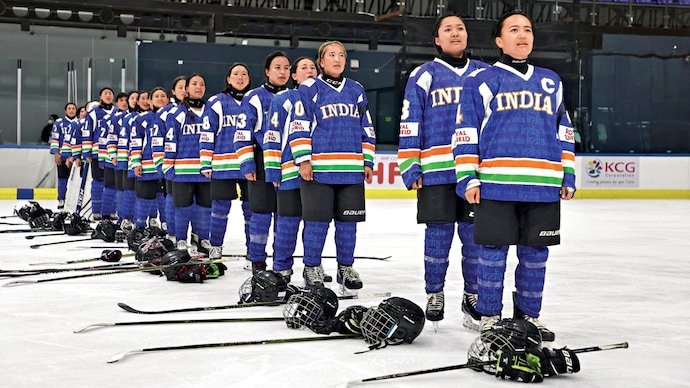
Despite limited resources, inadequate infrastructure and financial challenges, India’s women’s national ice hockey team continues to pursue international success while inspiring more girls to take up the sport.
The Beginning of Women’s Ice Hockey in India
Ice hockey has gradually gained recognition in India, particularly in the cold regions of Ladakh, where frozen lakes and ponds provide natural playing surfaces during winter. While India’s men’s national ice hockey team has been active since 2009, the women’s team began its international journey in 2016, marking an important step towards greater participation of women in the sport.
The Indian Ice Hockey Association of India (IHAI) played a significant role in developing the women’s game. The association organised the first Women’s National Ice Hockey Championship in 2013, creating an opportunity for female players to compete and develop their skills. This initiative helped establish a foundation for women’s ice hockey in the country and eventually led to India’s participation in international competitions.
However, the journey was far from easy. The players had to overcome several challenges, including limited training facilities, a shortage of equipment, financial difficulties and a lack of access to proper ice rinks. Despite these obstacles, their determination helped the team gradually establish itself on the international stage.
Breaking the Ice Ceiling Despite Limited Resources
The growth of women’s ice hockey in India reflects the determination of athletes who continue to pursue their passion despite difficult circumstances. Unlike countries with established ice hockey facilities and professional training systems, Indian players have had to work with limited resources and infrastructure.
For many players, access to proper equipment and regular training has been a major concern. Their journey highlights the difficulties faced by athletes in less-developed sporting disciplines, particularly those that require specialised facilities and expensive equipment.
Training Challenges and Limited Infrastructure
One of the biggest challenges for Indian women’s ice hockey players is the lack of dedicated ice hockey infrastructure. In Ladakh, where many players come from, frozen lakes and ponds serve as natural alternatives to artificial ice rinks. However, these surfaces are available only during the winter months, leaving players with a short training window of approximately two to three months.
The limited winter season makes it difficult for athletes to maintain consistent practice throughout the year. Without access to permanent ice facilities, players have to make the most of the available conditions to develop their skating, coordination and match skills.
The Indian Ice Hockey Association has tried to address this challenge by sending the national team to tournament venues around 20–25 days before competitions. This allows players to acclimatise to the conditions and practise on proper ice before facing international opponents.
The team has also incorporated strength and conditioning into its preparation. Physical fitness is particularly important in ice hockey, a demanding sport that requires speed, balance, endurance and coordination. These efforts help players prepare for the intensity of international competition despite the limited opportunities available at home.
Financial Constraints and Equipment Costs
Financial limitations are another major obstacle for the women’s national ice hockey team. Ice hockey requires specialised equipment, including skates, protective clothing, helmets, gloves and sticks. The cost of purchasing and maintaining these items can be difficult for players and their families to manage.
In the early stages of the team’s development, some players had to borrow equipment from male family members to participate in the sport. This reflects the shortage of resources available to women athletes and the difficulties they face in accessing equipment specifically suited to their needs.
The expenses associated with training and international participation add to the challenge. Travel, accommodation, meals, local transportation and tournament preparation all require financial support. Limited sponsorship and funding can make it difficult for athletes to focus entirely on training and performance.
Despite these financial pressures, the players have continued to represent India and work towards improving their international standing. Their commitment demonstrates how passion and determination can keep a team moving forward even when the necessary resources remain limited.
Maiden International Success
India’s women’s national ice hockey team gradually gained valuable experience through international participation. Its appearance in the Challenge Cup of Asia in 2016 marked an important milestone, providing the players with an opportunity to compete against teams from other countries and understand the demands of international ice hockey.
The team continued to work towards improving its performance through training camps and international exposure. In 2017, the players trained in Kyrgyzstan before participating in the Challenge Cup of Asia. Such preparation helped the team gain experience and improve its readiness for competitive matches.
India subsequently achieved an important milestone by winning a bronze medal at the 2019 Challenge Cup of Asia in Abu Dhabi. The achievement was significant for a team that had been working with limited facilities and financial resources. It demonstrated the progress made by the players and offered encouragement for the future of women’s ice hockey in India.
International tournaments also provide valuable learning opportunities. Competing against experienced teams helps players understand different playing styles, improve tactical awareness and identify areas that need further development.
India’s participation in the 2023 IIHF Asia and Oceania Championship further demonstrated the team’s determination to compete at the international level. The players secured victories against Kuwait and Kyrgyzstan but lost the bronze-medal match against Thailand, finishing fourth in the competition.
Although the team narrowly missed out on another medal, the campaign offered valuable experience and highlighted the progress of Indian women’s ice hockey. Continued exposure to international competition remains important for improving the team’s performance and building confidence among its players.
Role of the Indian Ice Hockey Association
The Indian Ice Hockey Association of India has played an important role in supporting the development of ice hockey in the country. Its efforts have included organising competitions, facilitating international participation and encouraging more players to take up the sport.
The association’s work is particularly important because ice hockey remains a relatively less-developed sport in India. The challenges are not limited to the national team; they also affect the availability of training opportunities, coaching, equipment and suitable facilities at the grassroots level.
Promoting Grassroots Development
Grassroots development is essential for creating a stronger future for women’s ice hockey. Introducing the sport to children and young people can help identify promising players and build a wider talent pool for the national team.
The association has worked towards encouraging participation through initiatives involving schools and colleges, workshops and training opportunities. These efforts can help familiarise young people with ice hockey and provide aspiring athletes with opportunities to learn the fundamentals of the sport.
Greater awareness is also necessary to encourage families and communities to support girls who want to pursue ice hockey. By providing more opportunities to participate, grassroots initiatives can help make the sport more accessible and create a stronger pathway from local participation to national-level competition.
However, the long-term success of these initiatives depends on consistent support. Better access to equipment, qualified coaching, training facilities and financial assistance would allow more young players to develop their skills and remain involved in the sport.
Expanding the Sport Beyond Traditional Regions
Ladakh has been one of the key centres of ice hockey in India because of its winter conditions and natural ice surfaces. However, expanding the sport beyond its traditional regions is important for increasing participation and creating more opportunities for aspiring players.
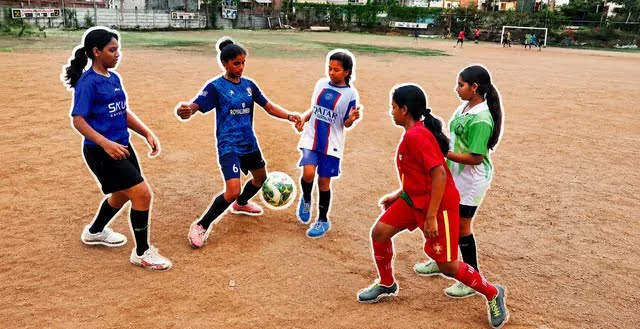
Efforts to promote ice hockey in other parts of the country, including Telangana and Maharashtra, can help introduce the game to new communities. Such initiatives may also contribute to greater participation among women and girls who otherwise might not have the opportunity to experience the sport.
Expanding the sport geographically would require suitable training arrangements, access to equipment and sustained development programmes. While natural ice conditions are limited to certain regions, structured initiatives and improved facilities could help make participation more accessible elsewhere.
A broader development strategy would also strengthen the talent pool available to the national team and encourage greater recognition of ice hockey within India’s sporting landscape.
Sustained Efforts and the Road Ahead
The journey of India’s women’s national ice hockey team is a story of perseverance in the face of limited resources. From borrowing equipment and practising on frozen lakes to competing in international tournaments, the players have continued to push the boundaries of what is possible for women’s ice hockey in the country.
Their progress also highlights the need for stronger institutional support. Improved infrastructure, reliable funding, sponsorships, better access to equipment and regular training opportunities could significantly improve the team’s preparation and performance.
Support from sports organisations, government bodies, sponsors and local communities would help reduce the financial burden on players. Investment in grassroots programmes could also ensure that more girls have the opportunity to learn the sport and pursue it competitively.
Harjinder Singh has emphasised the importance of developing the game at the grassroots level and creating more opportunities for participation. Initiatives involving schools, colleges, workshops and training programmes can help build awareness and encourage a new generation of players.
Women’s ice hockey in India still faces considerable challenges, but the team’s achievements show that progress is possible with determination, structured preparation and sustained support. The players have already demonstrated their ability to compete internationally despite limited infrastructure and resources.
The next stage of development will depend on turning this determination into long-term growth. With improved facilities, greater financial assistance and more opportunities for young athletes, India’s women’s national ice hockey team can continue to strengthen its position and inspire more girls to take up the sport.
The journey to break the ice ceiling is far from over, but the team’s efforts have laid an important foundation for the future of women’s ice hockey in India.