Extreme Sports Under Scrutiny After Fatal Accidents Highlight Safety Gaps
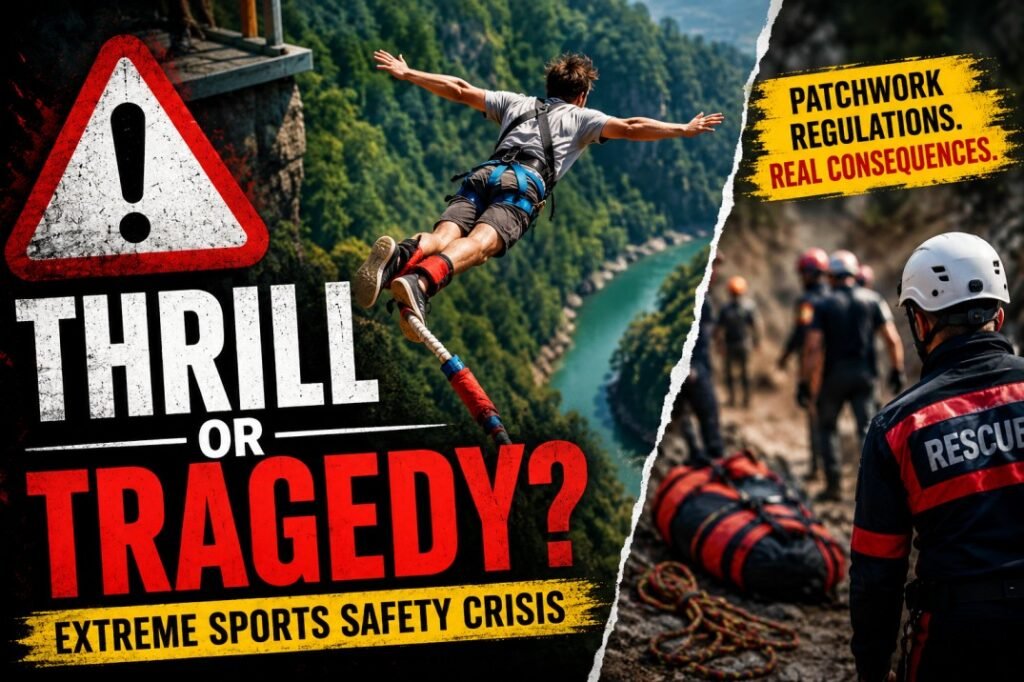
A string of fatal accidents in extreme sports across the world has renewed concerns over the absence of consistent safety regulations governing adventure tourism, prompting experts to call for stricter oversight and standardized safety practices.
The debate intensified after the tragic death of 21-year-old Maria Eduarda Rodrigues de Freitas in Brazil earlier this month. The young woman fell to her death during a rope-jumping activity after instructors allegedly pushed her off a bridge without properly securing her safety equipment. The shocking incident, captured on video and widely shared online, has sparked outrage and renewed scrutiny of adventure sports operators.
Industry experts say that while some established disciplines such as skydiving have developed robust internal safety protocols over decades, the broader adventure sports sector remains largely fragmented. Regulations often vary by country, state or even local authorities, leaving many high-risk activities without mandatory operating standards or consistent inspections.
Unlike commercial aviation or traditional sporting events, many adventure activities rely heavily on operator discretion. Safety measures, instructor certification requirements, equipment inspections and emergency response plans frequently differ across jurisdictions, creating what experts describe as a patchwork regulatory system.
Recent incidents have added to growing concerns. Earlier this month, renowned extreme athlete Andy Lewis was among two people killed during a tandem BASE jump in Utah, once again drawing attention to the inherent risks associated with high-adrenaline sports.
The adventure tourism industry has expanded rapidly over the past decade, attracting thrill-seekers to activities ranging from bungee jumping and zip-lining to BASE jumping, canyon swings and rope jumps. While operators generally emphasize participant waivers and personal responsibility, safety advocates argue that these measures cannot replace comprehensive regulatory oversight.
Experts believe mandatory licensing, regular equipment inspections, standardized instructor training and clearly defined emergency protocols could significantly reduce preventable accidents. They also stress the importance of independent audits instead of relying solely on self-regulation by operators.
Although no amount of regulation can eliminate the inherent dangers of extreme sports, specialists say stronger and more uniform safety standards could help ensure that participants understand the risks while minimizing avoidable tragedies.
As adventure tourism continues to gain popularity worldwide, policymakers and industry stakeholders are facing increasing pressure to strike a balance between preserving the thrill of extreme sports and ensuring participant safety through stronger oversight.