Callum Dreyer: From School Rowing to Youth Olympic Gold at Dakar 2026
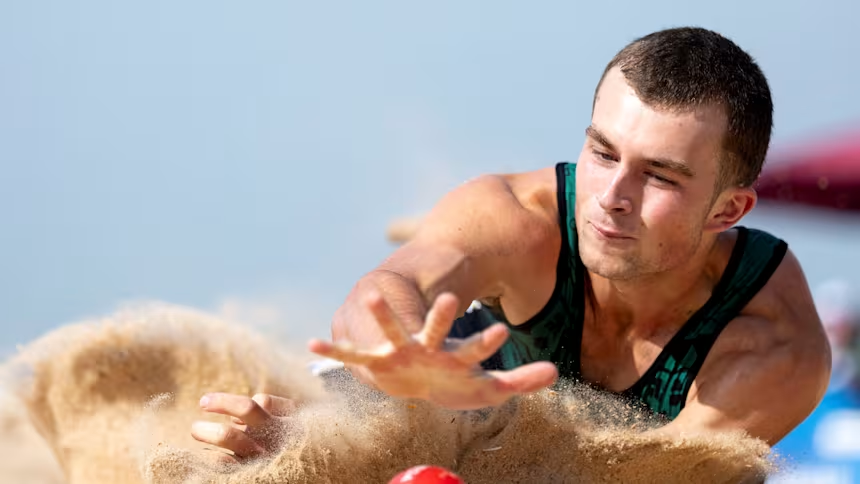
Not every sporting champion begins with years of international experience. Sometimes, an opportunity, the right guidance and a willingness to learn can change an athlete’s journey completely. South Africa’s Callum Dreyer demonstrated exactly that at the Dakar 2026 Youth Olympic Games, where he went from an inexperienced coastal rower to a gold medallist.
The 16-year-old Hilton College student won the men’s solo coastal beach sprint competition, delivering South Africa’s first gold medal of the Games. His victory was particularly remarkable because he had started rowing only around 15 months earlier and had limited experience competing at the international level.
For Dreyer, Dakar became much more than an international debut. It was the culmination of a rapid rise built through school rowing, beach training and a determination to take on an unfamiliar challenge.
Callum Dreyer’s Rowing Journey Began at Hilton College
How School Rowing Started His Sporting Career
Dreyer began rowing at Hilton College in KwaZulu-Natal, where he developed his initial skills in flat-water rowing. His early experience at the school helped him understand the technical demands of the sport and build the strength required for competitive rowing.
He has credited winning the national championships with his school team as the moment that strengthened his passion for rowing. The achievement gave him a memorable introduction to competitive success and encouraged him to pursue the sport further.
His progress was especially impressive considering how recently he had picked up an oar. Within approximately 15 months, he had moved from school-level rowing to representing South Africa at an international youth competition.
From Flat Water to Coastal Beach Sprints
Dreyer’s development took another direction when he became interested in coastal rowing. His introduction to the discipline began as a spectator at a Durban Beachfront Regatta. He later attended a rowing camp at Midmar Henley Dam before beginning regular beach training at Vetch’s Beach.
Under coach Avlyn Gallwey, he learned the different technical demands of coastal beach sprints, including carrying and launching the boat, navigating the waves, completing turns and making a quick transition back onto the beach.
Coastal beach sprints require more than rowing speed. Athletes must combine running, boat handling, ocean awareness and physical endurance. Unlike traditional flat-water races, changing water conditions can make every competition unpredictable.
Dreyer’s ability to adapt quickly helped him earn an opportunity to trial for South Africa’s coastal rowing squad. His performances eventually secured him a place at the Dakar 2026 Youth Olympic Games.
Callum Dreyer’s Dakar 2026 Youth Olympic Games Challenge
A Fourth-Place Finish in the Rowing Time Trials
Dreyer arrived in Senegal as South Africa’s only rowing representative at the Youth Olympic Games. He was also facing competitors who were generally older and had more experience in the discipline.
The young South African admitted before the competition that coastal beach sprints were relatively unfamiliar to him. Rather than setting an ambitious prediction, he wanted to gain experience and give his best against the international field.
His opening performance quickly changed expectations. Dreyer finished fourth overall in the men’s solo time trials, recording a rowing time of 2:35.94 and a beach sprint time of 7.87 seconds. The result secured automatic qualification for the last 16.
He described himself as delighted with the performance, particularly because the water conditions were difficult and the waves made the competition challenging.
From a Close Quarter-Final to Callum Dreyer’s Gold Medal
Surviving a Dramatic Quarter-Final
The knockout rounds tested Dreyer’s composure. In the quarter-final, he faced Czech rower Ondrej Zizka in a closely contested race.
His start did not go according to plan after his oar became stuck in the sand as he prepared to launch. The mistake cost him valuable time, but Dreyer recovered during the rowing section and produced a strong final sprint.
He won the race by just 0.14 seconds, recording 2:24.52 to secure his place in the semi-finals.
Defeating Hungary Before Reaching the Final
Dreyer continued his impressive run against Hungary’s Adam Moor in the semi-final. The South African produced a time of 2:29.35, comfortably finishing ahead of Moor, who recorded 2:46.79.
The victory earned him a place in the gold medal race against Spain’s Diego Molina Martinez.
A Dominant Final Gives South Africa Its First Gold
Dreyer saved his strongest performance for the final. He completed the race in 2:15.65 to defeat Molina Martinez and claim the men’s solo coastal beach sprint title.
The winning performance was also the fastest time recorded in the competition. Hungary’s Adam Moor secured bronze.
For Dreyer, the result was a remarkable achievement after beginning his rowing journey just over a year earlier. He expressed pride in representing South Africa and Africa, while acknowledging the support of his coaches and the Team South Africa staff.
The victory also gave South Africa its first gold medal at Dakar 2026, adding a significant moment to the country’s Youth Olympic campaign.
Callum Dreyer’s Family Background and Support System
A Sporting Influence at Home
Dreyer also comes from a sporting family. His father, Martin Dreyer, is a seven-time winner of the Dusi Canoe Marathon, one of South Africa’s best-known canoeing competitions.
Although rowing and canoeing are different disciplines, growing up around endurance water sports has given Callum an environment closely connected to athletic competition.
His development has also depended on the support of Hilton College and his coastal rowing coach, Avlyn Gallwey. The combination of school-based rowing and specialist beach training helped him adapt to the demands of an international competition.
What Callum Dreyer’s Dakar 2026 Gold Means for South African Rowing
Dreyer’s success is an important result for South African rowing and the development of young coastal rowing athletes. His achievement demonstrates how quickly a developing athlete can progress when school programmes, coaching and competitive opportunities come together.
The Dakar 2026 Youth Olympic Games also marked the first Youth Olympic appearance for coastal beach sprints, giving the discipline a new international platform among young athletes.
For Dreyer, the gold medal could be the beginning of a much longer journey in competitive rowing. What started as a school sporting activity has now produced a Youth Olympic champion, and his performance in Senegal has given him a major platform to build on.
At just 16, Callum Dreyer has already achieved something that once seemed difficult to imagine. His story is not simply about winning a medal; it is about how quickly dedication, adaptability and the right opportunities can transform a young athlete’s sporting future.