Snicko Under Fire as Ashes Dispute Escalates in Adelaide
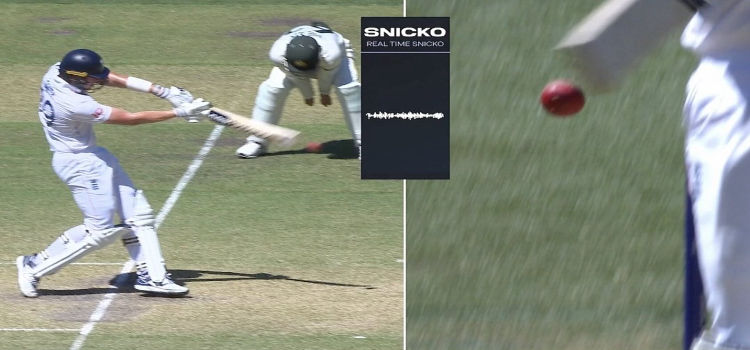
England’s Ashes campaign continued to unravel on day two of the third Test in Adelaide, but the spotlight once again fell on Snicko technology as players from both sides openly questioned its reliability.
After Alex Carey’s controversial reprieve on day one, England wicketkeeper Jamie Smith became the centre of two separate review decisions that further fuelled frustration around the use of audio-based technology.
Carey Decision Sets the Tone
The dispute stems from Wednesday’s incident when England reviewed a caught-behind appeal against Alex Carey, who was batting on 72. Although a clear spike appeared on Snicko, it was judged to be out of sync with the video footage, leading to Carey being given not out.
It later emerged that the issue was caused by an operator error, a revelation that heightened scrutiny on the system heading into day two.
First Smith Incident: Glove or Helmet?
The first contentious call involving Jamie Smith came in the 44th over, with England at 149-5.
Smith attempted a defensive shot and the ball looped towards Usman Khawaja at slip. Australia appealed for a catch, prompting on-field umpire Nitin Menon to refer the decision upstairs to check whether the ball had carried cleanly.
TV umpire Chris Gaffaney reviewed multiple angles, focusing on whether the ball had made contact with Smith’s glove or helmet. While video replays appeared to suggest glove contact, Snicko showed a spike as the ball passed Smith’s helmet, not his glove.
Gaffaney ruled the ball had hit the helmet, and Smith was given not out. The decision visibly angered Australian fielders.
One player was heard on the stump microphone saying, “Snicko needs to be sacked,” while Marnus Labuschagne questioned the ruling, asking whether the ball had gone through the glove.
Menon was heard explaining that while the on-field umpires felt it had hit the glove, the TV umpire believed it was helmet contact. In any case, the ball did not appear to carry cleanly to Khawaja.
Second Decision Ends Smith’s Innings
Smith was not as fortunate later in the innings.
Facing Pat Cummins, he attempted a pull shot and Australia appealed loudly for a thin edge. Smith appeared confident he had not hit the ball and was prepared to review the decision if it had been given out on the field.
Menon again referred the call upstairs due to uncertainty over whether the ball had carried.
As players gathered, Nathan Lyon was heard asking Ben Stokes if he had heard anything. Gaffaney initially stated there was “nothing obvious” on the replay, but Snicko displayed a rough spike within a frame of the ball passing the toe of Smith’s bat — considered within acceptable margin.
Smith was given out for 22, leaving England 159-6 in reply to Australia’s first-innings total of 371. Both Smith and Stokes walked away visibly frustrated.
Growing Distrust in Technology
The contrasting outcomes deepened concerns that players no longer trust Snicko.
Former England spinner Alex Hartley said on Test Match Special that the lack of confidence in the system is influencing behaviour on the field.
She suggested teams are now appealing for everything, knowing that uncertainty around Snicko might work in their favour.
Australian players were also heard expressing doubt during the decision-making process, with one remarking before Smith’s dismissal: “This could be anything.”
Was the Correct Process Followed?
Questions were also raised about whether the TV umpire should have checked for an edge when the referral was initially for a fair catch.
Under ICC playing conditions, the third umpire is required to determine whether the batter has been caught, including checking for a no-ball and whether the ball made contact with the bat.
Former Australia fast bowler Glenn McGrath said he believed the correct procedures were followed and that, in his view, the final decisions were probably right.
Controversy Far From Over
Despite that assessment, the wider issue remains unresolved. With multiple high-profile incidents across consecutive days, concerns over Snicko’s accuracy and consistency are growing.
As England edge closer to defeat in the Test, the technology debate shows no sign of fading — and trust in the system appears to be eroding among players on both sides.