

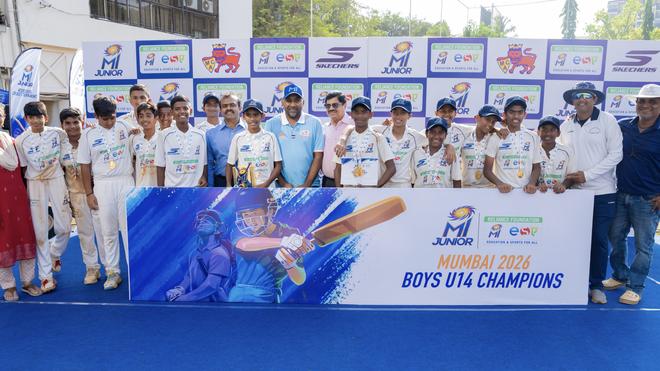
The talk around Rohit Sharma ahead of Indian Premier League 2026 isn’t about redemption — it’s about recalibration.
According to Mahela Jayawardene, what fans will witness this season is not a dramatic overhaul, but a carefully engineered shift in how Rohit approaches his role within the Mumbai Indians setup.
A Role Rewritten, Not Replaced
Rather than chasing the archetype of explosive T20 openers, Rohit’s evolution seems rooted in situational awareness. The focus is on optimizing phases — identifying when to anchor, when to accelerate, and how to construct innings based on match-ups rather than instinct alone.
This subtle pivot reflects a broader tactical trend in T20 cricket, where adaptability often outweighs sheer aggression.
Numbers Behind the Need
Recent seasons have shown fluctuations in Rohit’s strike rate and consistency, especially in the powerplay. While still capable of match-defining knocks, the challenge has been converting starts into impactful innings.
Jayawardene’s remarks suggest that MI’s think tank has zeroed in on this — not by demanding more risk, but by refining decision-making: shot selection, tempo control, and exploiting specific bowling types.
The Senior-Pro Advantage
What Rohit brings, beyond numbers, is game intelligence. In a squad blending youth and experience, his ability to read conditions and guide partnerships could be as crucial as his runs.
The “new version” isn’t about reinventing his identity — it’s about maximizing it.
A Strategic Season Ahead
For Mumbai Indians, this could be a defining tweak. If Rohit successfully transitions into a more adaptive, phase-based role, it may unlock greater balance at the top — and reduce the over-reliance on middle-order recovery acts.
IPL 2026, then, may not just be about how much Rohit scores — but how he scores, and when he chooses to take control.
A quieter transformation, perhaps — but one that could shape MI’s entire campaign.










Discussion about this post