Olympic Quota Won, But No Guaranteed Ticket: NRAI Retains Trials System for LA 2028
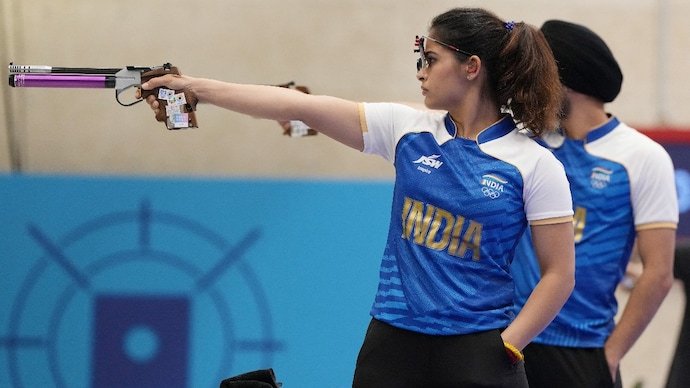
Winning an Olympic quota place is usually a major milestone in a shooter’s career. However, for Indian shooters targeting the Los Angeles 2028 Olympics, securing a quota will not automatically guarantee a place in the final Indian contingent.
The National Rifle Association of India (NRAI) announced its Olympic selection criteria on November 1, 2026, retaining the Olympic Selection Trials (OST) system used during the Paris 2024 Olympic cycle. Under the revised framework, quota winners will have to compete against other eligible Indian shooters, with final selection determined through performance-based assessments.
The decision puts the spotlight on consistency, competitive form and performance under pressure, making the road to LA 2028 another demanding challenge for India’s shooting community.
NRAI Retains Olympic Selection Trials for LA 2028
The NRAI has decided to continue with the Olympic Selection Trials format for rifle and pistol shooters, with some modifications to the previous selection framework.
The system will remain in effect from the beginning of the LA 2028 qualification cycle until the selection of India’s Olympic shooting team.
Under this approach, athletes who secure Olympic quota places at international competitions will not receive automatic entry into the final Olympic squad. Instead, they will be required to participate in the selection trials alongside other eligible shooters.
The policy aims to assess athletes on their current competitive performances rather than relying exclusively on their achievements at quota-winning competitions.
Importantly, the NRAI has clarified that an Olympic quota belongs to the country and the association, not to the individual shooter who earns it.
Final Average Score and Quota Bonus Points to Decide Selection
One of the key elements of the LA 2028 selection policy is the Final Average Score (FAS), which will be calculated using the average of a shooter’s three highest scores across the four Olympic Selection Trials.
The selection process will also consider applicable Quota Bonus Points (QBP), giving due consideration to athletes who have secured Olympic quota places for India.
This means that shooters will need to combine strong performances in the selection trials with the benefits provided under the quota bonus system.
The NRAI has also made participation in at least three of the four Olympic Selection Trials mandatory for eligibility. The Final Average Score will only be calculated for athletes who have recorded scores in at least three trials.
According to the association, if an athlete enters a trial but withdraws before completing it for reasons attributable to the athlete, the score will be treated as the exact arithmetic total standing at the time of withdrawal for selection purposes.
Rudrankksh Patil’s Paris 2024 Experience Highlights the Selection Debate
The decision to retain the trials-based system brings back memories of the selection controversy surrounding India’s shooting team for the Paris 2024 Olympics.
One of the most prominent examples involved former world champion Rudrankksh Patil. Despite securing India’s Olympic quota in men’s 10m air rifle, Patil lost his place in the Olympic team to Sandeep Singh, who performed better in the NRAI selection trials.
Singh eventually finished 12th at the Paris Olympics.
The previous selection process also generated discontent and legal challenges, as some quota-winning shooters failed to reproduce their international performances during the domestic trials.
The experience remains an important reference point in the debate over whether Olympic selection should prioritise quota-winning achievements or performances closer to the Games.
By retaining the trials format for LA 2028, the NRAI has once again placed significant importance on consistency and current form.
International Competition Experience Made Mandatory
The NRAI has also established international competition requirements for shooters seeking eligibility for the Olympic Selection Trials.
Athletes must have participated in at least two designated ISSF competitions in each individual event for which they seek Olympic entry.
The eligible competitions include:
ISSF World Championships
ISSF World Cups
Asian Championships offering Olympic quota places
These competitions must have taken place between November 1, 2026, and April 30, 2028.
The requirement is intended to ensure that athletes competing for Olympic selection have sufficient international exposure and experience during the qualification cycle.
Doha World Championship Marks India’s First Major LA 2028 Opportunity
The announcement of the selection policy coincides with the beginning of the ISSF World Championship Rifle, Pistol and Shotgun in Doha, Qatar.
The competition, running from November 1 to 14, is the first major opportunity for Indian shooters to secure Olympic quota places for Los Angeles 2028.
A total of 36 Olympic quota places are available across 12 individual shooting events, with three places on offer in each event.
India has entered a 54-member shooting contingent, with two-time Olympic medallist Manu Bhaker among the leading names. Other prominent Indian competitors include Neeru Dhanda, Elavenil Valarivan, Suruchi Singh, Kamaljeet Sohlot and Anantjeet Singh Naruka.
Doha provides the country’s shooters with their first major opportunity to begin collecting Olympic quota places in the LA 2028 qualification cycle.
India’s Road to LA 2028: Performance Will Be the Deciding Factor
With the NRAI retaining the Olympic Selection Trials system, India’s shooters face a selection process in which international achievements alone will not be enough.
Quota winners will receive due consideration through the applicable bonus points, but they must also demonstrate competitive consistency during the domestic selection trials.
For emerging shooters, the system offers an opportunity to challenge established names. For experienced international medallists, it means maintaining their form throughout the Olympic cycle.
As the qualification campaign begins in Doha, the bigger challenge for Indian shooting will be to secure quota places and then convert those opportunities into a strong Olympic squad.
For India’s shooting stars, the message is clear: winning an Olympic quota is an important achievement, but earning the final ticket to Los Angeles will require another battle.