Eala Mania: How One Filipino Star Is Turning Tennis Into a National Movement
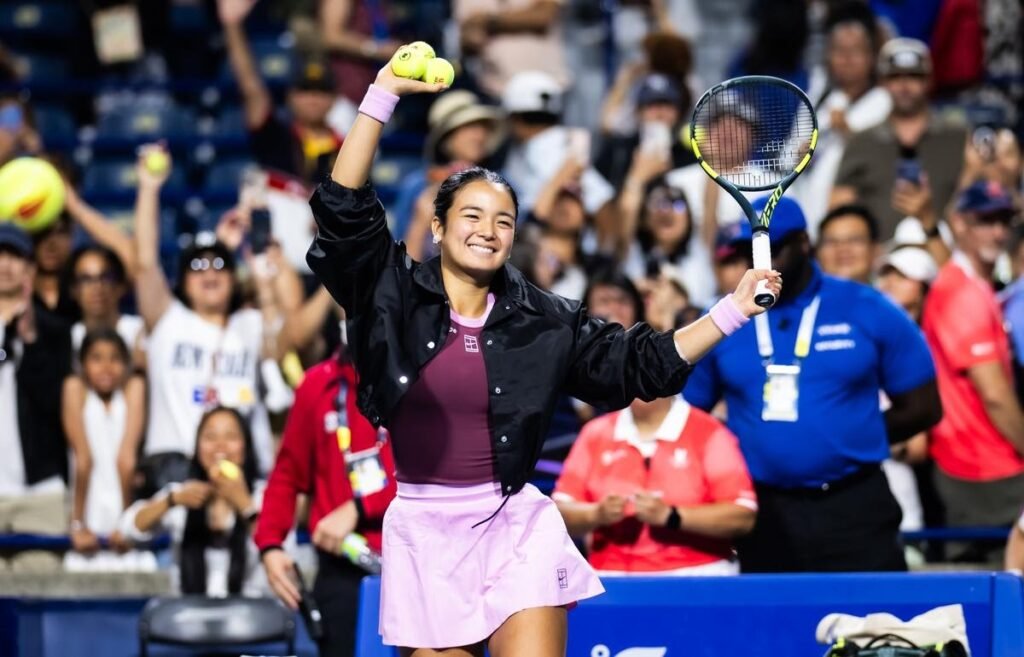
From a Grand Slam giant-killer to a WTA champion, Alex Eala has gone from promising youngster to one of tennis’ most talked-about personalities — and her biggest weapon may be the crowd she carries with her.
There is a new sound following Alexandra Eala around the tennis world.
It is not simply the thud of a left-handed forehand or the applause after another big upset. It is the roar of thousands of Filipino fans, the flags in the stands, the chants from supporters and the growing sense that whenever Eala steps onto a court, an entire nation is watching.
That phenomenon has acquired a name: Eala Mania.
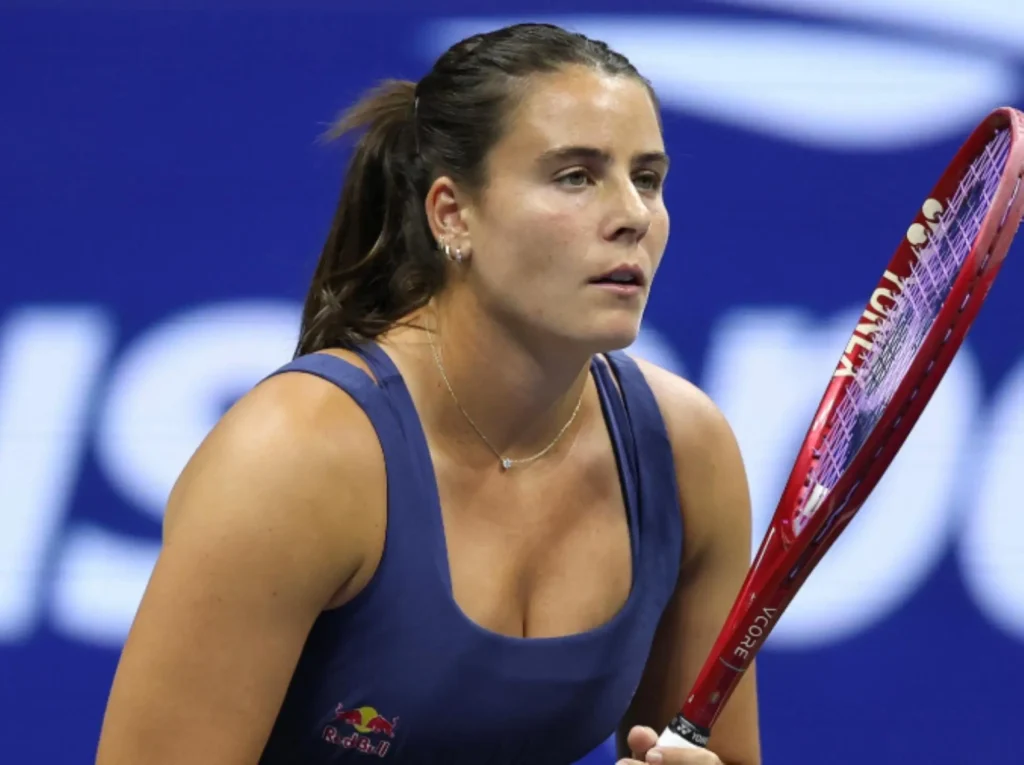
At just 21, the Filipina has become far more than a rising tennis player. She is now a sporting symbol for a country where basketball and boxing have traditionally dominated the conversation.
And the remarkable part is that the attention has been earned the hard way — through results.
From junior champion to world No. 18
Eala’s rise has been building for several years.
In 2022, she became the first Filipino player to win a junior Grand Slam singles title, lifting the US Open girls’ trophy in New York. That success offered a glimpse of what could come, but her transition into senior tennis required patience.
The breakthrough arrived at the 2025 Miami Open.
Ranked outside the world’s top 100 and competing as a wild card, Eala produced one of the most eye-catching runs of the tournament. She defeated major champions Jelena Ostapenko, Madison Keys and Iga Swiatek before reaching the semi-finals.
That run transformed her from an intriguing prospect into a player the wider tennis audience could no longer ignore.
Since then, the victories over elite opposition have continued.
Wimbledon changed the scale of the story
The 2026 Wimbledon Championships provided another major chapter.
Eala reached the fourth round, her deepest Grand Slam run at the time, and produced one of the biggest wins of her career by defeating six-time Grand Slam champion Iga Swiatek in straight sets.
Her campaign eventually ended against Jasmine Paolini, but the impact of the run extended far beyond the result.
Filipino fans had followed her throughout the tournament, turning matches into communal viewing events back home.
The message was becoming clear: Eala was no longer simply representing herself.
The Washington week that created a champion
Then came Washington.
At the Mubadala DC Open, Eala put together a spectacular sequence of wins to claim her maiden WTA Tour singles title.
Her route to the trophy included victories over Qinwen Zheng, Leylah Fernandez, Elina Svitolina, Naomi Osaka and Jessica Pegula.
The final against Pegula became the defining match of the week.
After losing the opening set, Eala fought her way back before producing a stunning performance in the deciding set. The rain-affected final eventually ended:
Alex Eala def. Jessica Pegula — 4-6, 6-4, 6-0
The victory made Eala the first Filipino to win a WTA Tour-level singles title.
More importantly, it sent her into the world’s top 20.
She subsequently reached a career-high No. 18 in the WTA rankings, becoming the highest-ranked women’s singles player from Southeast Asia in tennis history.
The numbers behind Eala Mania
Eala’s popularity is not simply the product of national pride. Her results provide the foundation.
Key numbers
21: Eala’s age
World No. 18: Career-high WTA ranking
No. 17: Her seeding at the 2026 US Open
2022: US Open girls’ singles champion
2025: Miami Open semi-finalist
2026: Wimbledon fourth-round run
2026: First WTA Tour singles title
6-0: Decisive-set score against Jessica Pegula in the Washington final
38-20: Her overall match record across levels in 2026 entering the US Open
7-5, 6-2: Eala’s previous victory over Mary Stoiana in their 2024 ITF meeting
Her record against top players is particularly striking. Eala has repeatedly shown that she is comfortable against the biggest names in women’s tennis, rather than simply accumulating victories against lower-ranked opposition.
That giant-killing ability is one of the reasons her popularity has spread beyond the Philippines.
Why are fans so invested?
The answer is bigger than tennis.
The Philippines has produced sporting icons before, but Eala’s rise has opened a different door. Tennis has never occupied the same cultural space in the country as basketball or boxing.
Now, Filipino communities around the world are turning tennis matches into events.
In Toronto, Eala’s popularity became so significant that organisers had to respond to extraordinary demand surrounding her matches. Her first-round match sold out rapidly, while the atmosphere around her appearances transformed sections of the tournament into something resembling a Filipino home crowd.
The phenomenon has travelled with her from tournament to tournament.
Flags appear in the stands.
Fans wear shirts carrying her name.
Watch parties take place in the Philippines.
Even practice sessions can attract sizeable crowds.
That is unusual in professional tennis, where the biggest audiences are normally reserved for marquee matches and established Grand Slam champions.
The Nadal connection
Another important part of Eala’s development is her association with Rafael Nadal’s academy.
She moved to the Rafa Nadal Academy in Mallorca as a teenager and spent several formative years developing her game there.
The influence is visible in her approach: aggressive court positioning, early ball striking and an ability to absorb pace rather than simply relying on power.
Eala is also a left-hander — a relatively rare trait at the highest level of the women’s game.
That combination of anticipation, timing and left-handed angles has made her particularly uncomfortable for established opponents.
Eala is becoming bigger than the ranking
There is an important distinction between being a successful athlete and becoming a sporting movement.
Eala is beginning to cross that line.
Her popularity has become a commercial story as well. Nike has produced Philippines-inspired apparel featuring elements associated with Filipino identity, while her profile has expanded into major international media and sponsorship spaces.
But the most powerful part of the phenomenon remains the simplest:
People want to watch her play.
That is why tournament organisers are increasingly aware of the demand around her matches.
In Toronto, the response was so strong that Eala’s presence influenced scheduling and the atmosphere around the event.
Former world No. 1 and US Open champion Andy Roddick has also described Eala Mania as a genuine movement, arguing that she is attracting a passionate section of tennis supporters that barely existed around the sport in the Philippines a few years ago.
US Open: The next test
Now the story returns to where one of Eala’s earliest major chapters was written.
At the 2026 US Open, Eala enters as the world No. 18 and No. 17 seed, both career-best figures for a Grand Slam.
Her first-round opponent is American qualifier Mary Stoiana, ranked No. 122. The pair have met once before, with Eala winning their 2024 ITF encounter 7-5, 6-2.
The draw, however, becomes significantly more difficult beyond the opening round.
Potential obstacles include Iva Jovic, Coco Gauff, Mirra Andreeva and Elena Rybakina.
Eala’s challenge is therefore not simply to survive the first round. She has entered New York with expectations for the first time.
Last year, she arrived as a relatively unknown player ranked around No. 75 and stunned Clara Tauson in a dramatic three-set contest to claim her first Grand Slam main-draw victory.
This time, she returns as a seeded player with an entire fanbase expecting another chapter.
More than a tennis story
The most fascinating aspect of Eala Mania may be what happens away from the scoreboard.
Her success is changing the visibility of tennis in the Philippines.
Young fans now have a homegrown player to follow. Filipino communities overseas have another reason to gather around sport. And international tournaments are discovering just how powerful a new audience can be when it feels personally connected to an athlete.
Eala herself has remained cautious about the attention.
She has repeatedly emphasised gratitude and the responsibility that comes with representing Filipino culture.
That may be the key to understanding why the movement feels different.
She is not simply winning matches for a country.
She is giving that country a new sporting identity on one of the world’s biggest stages.
The bigger picture
Tennis has always searched for players capable of expanding its global reach.
Eala could be one of them.
She has the ranking, the results, the personality, the international following and — perhaps most importantly — the ability to make people who did not previously care deeply about tennis suddenly care about one particular match.
That is the real meaning of Eala Mania.
It is not just a hashtag. It is not simply a group of passionate Filipino supporters.
It is the meeting point of sporting excellence, national pride and a rapidly growing global audience.
At 21, Eala already owns a WTA title, a junior Grand Slam trophy, multiple victories over Grand Slam champions and a career-high ranking of No. 18.
The trophy cabinet is still relatively young.
The movement around her is already enormous.
And if Eala can turn the noise in the stands into another deep run at Flushing Meadows, the next stage of her story may be even bigger.
Key takeaway
Main matter: Alex Eala’s popularity has exploded because her on-court achievements have arrived alongside an unprecedented wave of Filipino support. Her 2026 Wimbledon run, first WTA title in Washington and rise to world No. 18 have transformed her from a promising player into a genuine global tennis attraction.