Roger Federer Backs the One-Handed Backhand: ‘There Is Still a Place for It’ in Modern Tennis
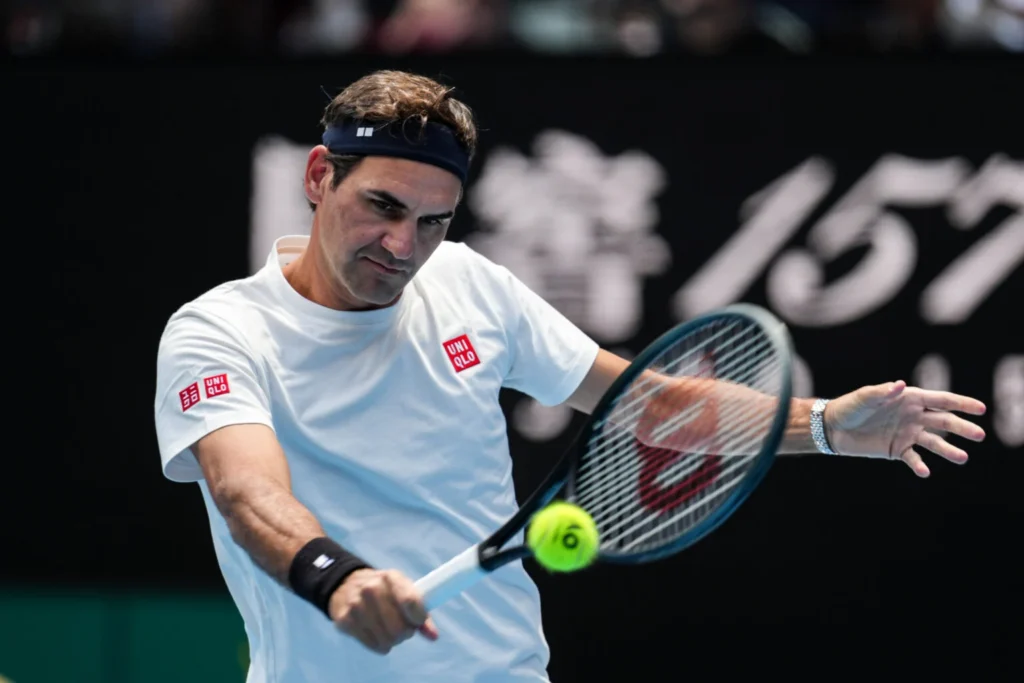
The one-handed backhand has become one of tennis’ rarest sights at the highest level. Once a defining feature of the sport, the elegant stroke has gradually been replaced by the more powerful and dependable two-handed backhand. But Roger Federer, one of its greatest practitioners, does not believe the one-hander has reached the end of the road.
Federer’s view is particularly significant because his own backhand helped turn the shot into an art form during the peak of his career. The 20-time Grand Slam champion believes the decline is real, but says coaching trends and the lack of elite role models may be as important as the demands of modern tennis.
Federer: The One-Hander Still Has a Role
Federer has acknowledged that the two-handed backhand offers clear advantages in some areas of the modern game, particularly when returning serve and defending against heavy shots.
However, he does not see that as a reason to abandon the one-hander altogether.
His central argument is that young players often copy what they see from the best professionals. With the leading generation overwhelmingly using two-handed backhands, juniors naturally tend to follow that model.
Federer believes coaches should also be more open to identifying players who may actually suit a one-handed technique rather than automatically teaching the two-hander.
Why the Two-Hander Has Taken Over
The modern game places enormous demands on players. Powerful serves, heavy topspin, faster rallies and high-bouncing balls can expose the limitations of a one-handed backhand.
A two-handed backhand provides greater stability and allows players to handle pace and high balls more comfortably. It is also generally easier for young players to learn and control.
Federer himself has previously acknowledged that he would favour the two-hander when teaching beginners because it is easier to develop at an early stage.
But he also points to an important question: once a player becomes comfortable with a two-handed stroke, how often do coaches encourage them to experiment with taking one hand off the racket?
That decision, according to Federer, could determine whether the one-hander continues to find a place among future generations.
The Numbers Show the Decline
The statistics underline why the debate has become so serious.
For the first time since the ATP rankings began in 1973, there was a period in 2024 when no player using a one-handed backhand occupied a place in the men’s top 10. Stefanos Tsitsipas’ fall to No. 11 triggered renewed discussion about whether the shot was slowly disappearing from elite tennis.
The situation remains striking. Recent analysis has identified only a small group of players in the ATP top 100 still using the one-hander, including names such as Grigor Dimitrov, Stefanos Tsitsipas, Lorenzo Musetti and Denis Shapovalov.
That represents a dramatic change from earlier generations, when the one-handed backhand was a standard weapon among top professionals.
Federer’s Own Legacy
Federer’s influence on the stroke cannot be separated from the discussion.
His backhand was not simply a topspin weapon. He could change direction, use the slice to disrupt rallies and attack the net, creating a variety of patterns that made his game difficult to predict.
His success also demonstrated that a one-hander could coexist with an aggressive modern baseline game.
Players such as Stan Wawrinka, Richard Gasquet, Grigor Dimitrov and Tsitsipas have subsequently carried the tradition forward, although their numbers remain tiny compared with the dominant two-handed generation.
A Battle Between Tradition and Modern Tennis
The debate is ultimately bigger than one tennis stroke.
The one-handed backhand offers reach, variety, attacking possibilities and an unmistakable aesthetic appeal. The two-hander, meanwhile, provides stability, power and defensive security that fit perfectly with today’s high-intensity baseline game.
The decline of the one-hander is therefore not simply about players choosing style over style. It reflects how tennis itself has changed.
Yet Federer believes there is room for both.
And that may be the most important part of his message. The one-handed backhand does not necessarily need to dominate tennis again. It simply needs enough talented players, supportive coaches and ambitious young athletes willing to keep experimenting with it.
Key Takeaways
Roger Federer believes the one-handed backhand still has a place in modern tennis.
The two-handed backhand remains the preferred choice because of its stability, especially on returns and defence.
Coaching methods play a major role in determining which backhand young players develop.
The absence of a one-hander from the ATP top 10 in 2024 highlighted the stroke’s decline.
Players such as Dimitrov, Tsitsipas, Musetti and Shapovalov continue to keep the technique alive.
Federer believes the presence of elite one-handed players could inspire another generation to try the stroke.
The Verdict
The one-handed backhand may no longer be the standard it once was, but Federer does not see it as a forgotten piece of tennis history.
Its future may depend less on whether it is universally effective and more on whether the next generation is given the freedom to discover it.
For now, the one-hander is endangered—but Federer believes it is far from finished.