Luis Enrique vs Pep Guardiola: The Tactical Evolution That Made PSG Champions of Europe
Luis Enrique’s Tactics: Why PSG Are More Than a Possession Team
What happens when a coach built on possession football learns that controlling the ball is not always enough? For Luis Enrique, the answer has helped transform Paris Saint-Germain into a team capable of winning the biggest prize in European football.
The Spanish manager has long been associated with the footballing philosophy popularised by Barcelona and Johan Cruyff. Yet his success in Paris has shown that his approach is not simply about keeping the ball, completing passes or dominating territory. It is about knowing when to control a game, when to press aggressively and when to strike at an opponent with devastating speed.
After guiding PSG to their first UEFA Champions League title in 2025 and successfully defending it in 2026, Luis Enrique has strengthened his place among the leading coaches of his generation. His journey also raises an intriguing question: how similar is he to Pep Guardiola, and where do their footballing ideas begin to differ?
Luis Enrique vs Pep Guardiola: The Barcelona Connection
The comparison between Luis Enrique and Guardiola is natural. Both are former Barcelona players whose coaching philosophies were shaped by the club’s emphasis on possession, movement, technical ability and intelligent positioning.
Luis Enrique took charge of Barcelona’s first team in 2014 and enjoyed an extraordinary debut season. His side won La Liga, the Copa del Rey and the Champions League in 2014–15, completing a historic treble.
That team was remembered for the attacking partnership of Lionel Messi, Luis Suárez and Neymar. Their individual brilliance was crucial, but Barcelona’s success also depended on coordinated movement, quick combinations and the ability to exploit space before opponents could recover their defensive shape.
Guardiola’s Barcelona teams were built around many of the same principles, particularly positional play and controlling matches through possession. However, their teams were not identical. Luis Enrique’s Barcelona often had greater emphasis on direct attacking transitions, allowing its forwards to use their speed and individual creativity to devastating effect.
Their shared footballing roots explain the comparison, but their careers demonstrate that the same philosophy can produce different styles of play.
PSG Tactics: How Luis Enrique Changed the Team
When Luis Enrique arrived at PSG in 2023, he inherited a club with enormous expectations and a squad filled with attacking talent. His challenge was not simply to collect trophies but to create a coherent team capable of competing consistently against Europe’s strongest opponents.
Initially, possession was central to his approach. PSG looked to control the ball, move opponents out of position and create passing angles through their midfield. High pressing helped them regain possession quickly after losing it.
However, the most important development was his willingness to adapt. Rather than insisting that every match follow the same pattern, Luis Enrique gradually allowed PSG to become more comfortable playing in transition and defending without the ball when necessary.
That flexibility became especially important during the club’s 2024–25 Champions League campaign. PSG could dominate possession against some opponents, but they could also absorb pressure and attack quickly when opportunities appeared.
The result was a more unpredictable side. Opponents could no longer assume that PSG would always try to control the match in the same way.
From Possession to Counterattacks: The Tactical Turning Point
Luis Enrique’s evolution at PSG illustrates an important principle in modern football: possession is a tool, not an objective in itself.
A team can complete hundreds of passes without creating enough clear chances. Against compact defences, circulation alone may not open the spaces required to score. Against aggressive opponents, however, winning the ball and attacking immediately can be just as effective as a prolonged possession sequence.
PSG increasingly demonstrated both approaches. Their players could press high to force mistakes, combine patiently around the penalty area or exploit the space left behind an opponent’s defensive line.
This change also required players to understand different roles. Forwards had to contribute to pressing as well as finishing, midfielders needed to control the tempo and full-backs had to provide width while remaining alert to defensive transitions.
The result was a team capable of changing its approach during a match without abandoning its core identity. That adaptability became one of the defining features of Luis Enrique’s PSG.
Ousmane Dembélé and the Power of Positional Flexibility
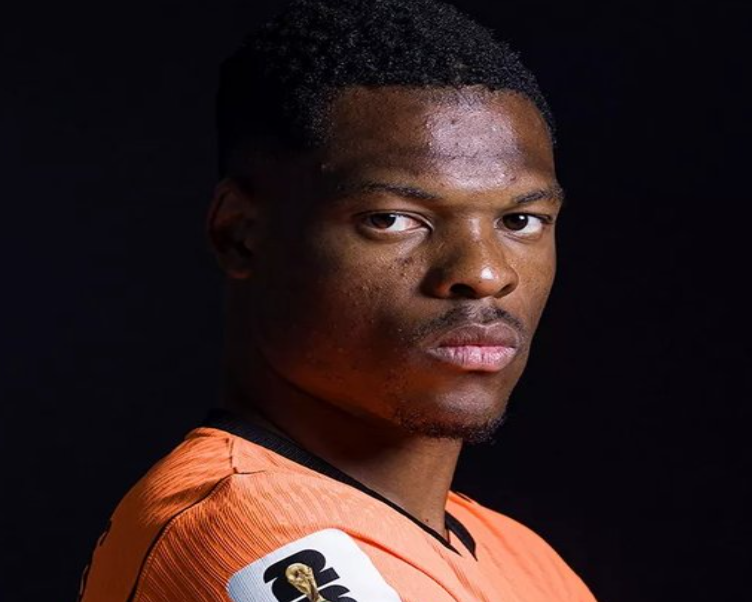
One of Luis Enrique’s most notable decisions was to give Ousmane Dembélé a more central attacking role. The Frenchman had often been used as a winger, where his pace and dribbling could stretch defences. Moving him into a more central position created new possibilities.
Dembélé could drop deeper to link play, move into spaces between defenders and lead the press from the front. His movement made it harder for opposing centre-backs to predict where the danger would come from.
The change was about more than repositioning one player. It reflected Luis Enrique’s wider belief that footballers should be able to occupy different spaces depending on the situation.
That flexibility also helped PSG avoid becoming too predictable. Rather than relying on fixed positions, players could rotate, exchange roles and create numerical advantages in different areas of the pitch.
Luis Enrique’s Champions League Legacy Grows
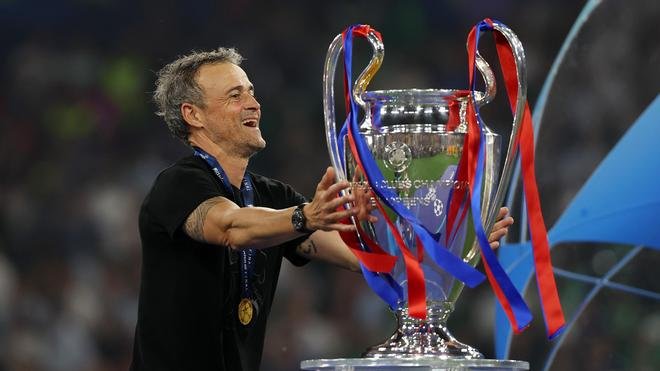
Luis Enrique’s record in Europe now places him among a select group of managers. He won the Champions League with Barcelona in 2015 before leading PSG to consecutive titles in 2025 and 2026.
The first PSG triumph was especially significant because it delivered the club’s maiden European Cup. Defending that title a year later demonstrated that the achievement was not limited to one exceptional campaign.
His success has also strengthened the argument that elite coaching involves more than imposing a preferred formation. Recruitment, player development, tactical adjustments and the ability to build a collective identity all contribute to sustained success.
Luis Enrique has benefited from a talented squad, but his decisions have helped give that talent a clear structure. PSG’s players are expected to attack together, defend together and adapt to the demands of different opponents.
Is Luis Enrique the Next Pep Guardiola?
Comparing managers purely through trophies can overlook the differences in their footballing ideas. Guardiola has built his reputation on highly structured possession, positional play and controlling space, while Luis Enrique has demonstrated a willingness to combine those principles with more direct transitions and varied defensive approaches.
Both demand technical quality, intelligent movement and intense collective work. Both have also shown that a successful team needs more than individual stars.
Yet Luis Enrique is not simply a Guardiola copy. His coaching career has developed its own identity, shaped by his experiences with Barcelona, the Spanish national team and PSG. His greatest strength may be his willingness to question his own methods when the team needs something different.
That does not mean every tactical adjustment guarantees success. Football remains unpredictable, and even the strongest teams encounter difficult periods. But PSG’s European achievements show how a clear philosophy can coexist with flexibility.
For Luis Enrique, the next challenge is to sustain that level while continuing to evolve. His story is no longer just about following Barcelona’s footballing tradition or being compared with Guardiola. It is about building a legacy of his own—and proving that the best tactical ideas are not always the ones a coach refuses to change.