Hyderabad Marathon 2026: Ethiopia Takes Both Elite Crowns as Gopi Thonakal Leads India
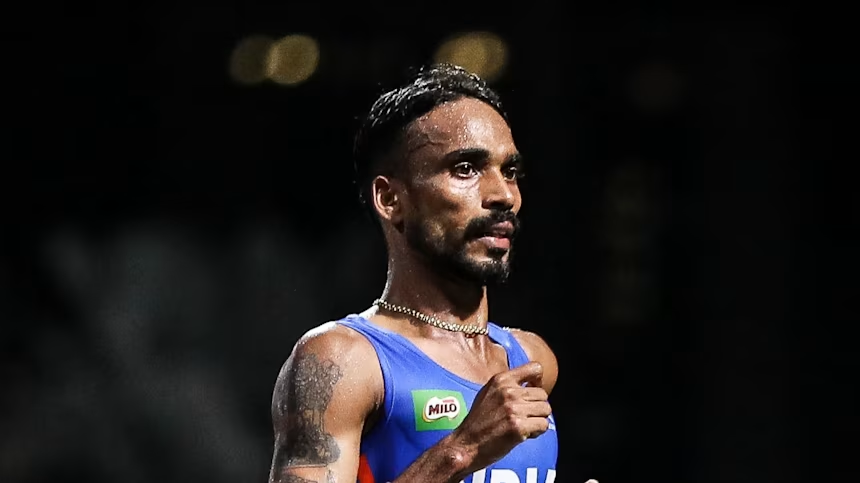
The 15th edition of the NMDC Hyderabad Marathon delivered a strong mix of international competition, Indian distance-running experience and a growing mass-participation culture, with Ethiopia claiming both elite marathon titles on Sunday.
Seboka Negusse won the men’s elite race in 2:20:57, edging Kenya’s Felix Kimutai, who recorded the same official time and finished second. Kenya’s Francis Cheruiyot completed the men’s podium in 2:21:29.
For India, the biggest talking point was veteran marathoner Gopi Thonakal, who finished fourth overall in 2:21:46 and emerged as the fastest Indian in the race.
Negusse wins a tight men’s contest
The men’s race was closely fought through the final stages. Negusse eventually secured the top spot, while Kimutai was just behind him with both runners officially credited with 2:20:57.
Cheruiyot was unable to match the leading pair in the closing stages but still produced a solid 2:21:29 for third.
Gopi remained firmly in the international pack, crossing the line in 2:21:46. His performance placed him fourth overall and comfortably made him the leading Indian male runner.
Men’s Elite Top Finishers
Seboka Negusse (Ethiopia) — 2:20:57
Felix Kimutai (Kenya) — 2:20:57
Francis Cheruiyot (Kenya) — 2:21:29
Gopi Thonakal (India) — 2:21:46
Man Singh (India) — 2:23:56
Pradeep Singh Mehta (India) — 2:26:12
Ranjit Singh (India) — 2:27:49
Bugatha Srinu (India) — 2:29:56
Emane Seifu dominates women’s field
The women’s elite race belonged to Ethiopia’s Emane Seifu, who produced a winning run of 2:46:29.
Seifu was challenged by compatriot Tsega Desta, but the Ethiopian pair finished first and second respectively. Kenya’s Teresiah Omosa took third in 2:47:17.
India’s Nirmaben Thakor was the leading Indian woman, finishing sixth overall in 2:50:20. She was followed by Bhagirathi Non, who clocked 2:51:41.
Women’s Elite Top Finishers
Emane Seifu (Ethiopia) — 2:46:29
Tsega Desta (Ethiopia) — 2:46:57
Teresiah Omosa (Kenya) — 2:47:17
Viola Jelagat (Kenya) — 2:49:49
Truphena Chepchirchir (Kenya) — 2:49:53
Nirmaben Thakor (India) — 2:50:20
Bhagirathi Non (India) — 2:51:41
Gopi’s latest chapter in a remarkable marathon career
Gopi Thonakal’s fourth-place finish adds another strong result to an already distinguished marathon career.
The 38-year-old, a former Asian marathon champion and Olympian, recently produced a personal best of 2:12:23 at the Valencia Marathon. He also finished second at the New Delhi Marathon earlier this year in 2:13:12.
His Hyderabad performance was therefore less about chasing a personal best and more about demonstrating that experience still matters at the highest level of Indian distance running.
Hyderabad Marathon grows beyond elite racing
The elite results were only one part of the event’s larger story. The 2026 marathon attracted tens of thousands of registrations across the Full Marathon, Half Marathon, 10K, 5K and Inclusive Run categories, underlining Hyderabad’s position as one of India’s major running destinations. Reports put total registrations at around 32,000, while participation across the race weekend was reported at approximately 26,500.
A particularly significant initiative was the participation of 184 tribal youngsters from Chhattisgarh, who made their marathon debut as part of an effort to identify and encourage sporting talent from tribal communities. The event also introduced an Inclusive Run, with around 300 differently abled participants taking part.
The marathon also retained its social impact focus, supporting 40 NGOs and contributing more than Rs 2 crore towards charitable causes over its history.
Records and key numbers
15th edition of the NMDC Hyderabad Marathon
Men’s winner: Seboka Negusse — 2:20:57
Women’s winner: Emane Seifu — 2:46:29
Fastest Indian man: Gopi Thonakal — 2:21:46
Fastest Indian woman: Nirmaben Thakor — 2:50:20
Second-place men’s time: Felix Kimutai — 2:20:57
Total registrations: Around 32,000
Tribal runners from Chhattisgarh: 184
Inclusive Run participation: Around 300 differently abled runners
Charitable support: More than Rs 2 crore raised for various causes
The bigger picture
Hyderabad 2026 was not simply about who crossed the finish line first. The narrow men’s finish showcased the competitiveness of the elite field, while Gopi Thonakal once again demonstrated the depth of India’s experienced marathon runners.
At the same time, the participation of tribal youth and differently abled runners showed how the marathon is expanding its identity beyond elite competition.
With Ethiopia taking both individual elite crowns and India producing a strong showing through Gopi and Nirmaben, the 15th edition offered a clear message: Hyderabad is becoming a major stage where elite performance, Indian endurance and mass participation meet on the same road.