Ryubi no Kon: The Traditional Bo Kata That Preserves Okinawa’s Martial Legacy
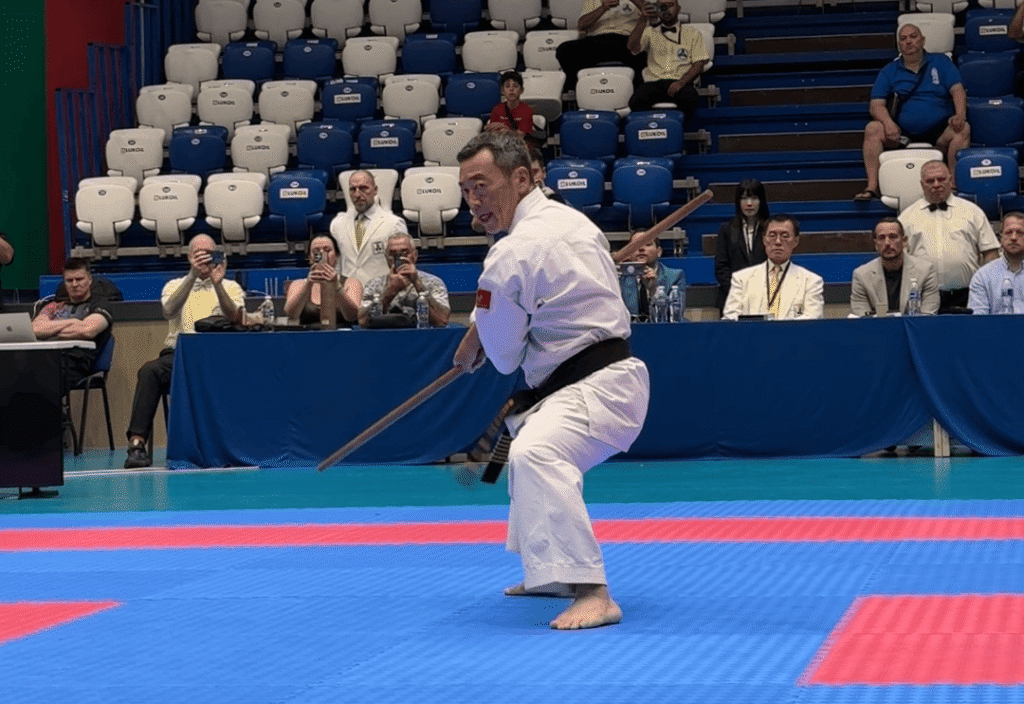
Ryubi no Kon Showcases the Art of Traditional Bojutsu
While Kyokushin Karate is globally recognized for its demanding full-contact fighting style, its connection to traditional Okinawan weapon arts remains equally significant. One such example is Ryubi no Kon, a classical Bo (staff) kata that continues to be preserved in the Kyokushin-kan curriculum.
In a demonstration by Shihan Masahide Ishijima, one of Kyokushin-kan’s leading technical instructors, the kata highlights the precision, discipline and fluidity required to master the six-foot wooden staff. Rather than focusing on speed alone, the performance emphasizes timing, balance, posture and controlled power, reflecting the philosophy behind traditional kobudo training.
What is Ryubi no Kon?
Ryubi no Kon is an advanced Okinawan Bo kata believed to have evolved from older staff forms developed by Soeshi Denuchi, a renowned martial artist from Shuri during the Ryukyu Kingdom era. The kata is named after the Ryubi region of Okinawa and has become one of the classical forms practiced in several kobudo schools before being adopted into the Kyokushin-kan syllabus.
Unlike beginner weapon routines, Ryubi no Kon demands exceptional coordination as practitioners repeatedly switch hand positions, execute defensive blocks, overhead strikes, thrusts and sweeping attacks while maintaining stable footwork.
Shihan Ishijima’s Technical Excellence
Masahide Ishijima’s demonstration reflects the high technical standards expected in Kyokushin-kan. Every movement is deliberate, with smooth transitions between offensive and defensive techniques, showing how effective Bo handling depends on body mechanics rather than brute force.
The kata combines:
Powerful overhead and diagonal strikes
Defensive blocking sequences
Rapid hand transitions on the Bo
Long-range thrusting techniques
Strong stance control and balance
Precise timing and rhythm
His execution serves as both a training reference for practitioners and a reminder of the importance of preserving traditional martial arts alongside modern competition.
Why Ryubi no Kon Matters
Although Kyokushin is primarily known for bare-handed combat, Kyokushin-kan continues to include kobudo as part of its broader martial arts education. Ryubi no Kon helps practitioners improve coordination, grip strength, body alignment and overall technical awareness—qualities that also enhance empty-hand karate.
The kata represents more than a choreographed routine; it is a living link between Okinawan martial traditions and contemporary karate practice.
Key Highlights
Kata: Ryubi no Kon
Weapon: Bo (traditional six-foot staff)
Style: Okinawan Kobudo / Kyokushin-kan
Demonstrated by: Shihan Masahide Ishijima
Focus: Precision, timing, balance, power and weapon control
Level: Advanced Bo kata