How the French Open Transformed N. Sriram Balaji’s Grand Slam Career
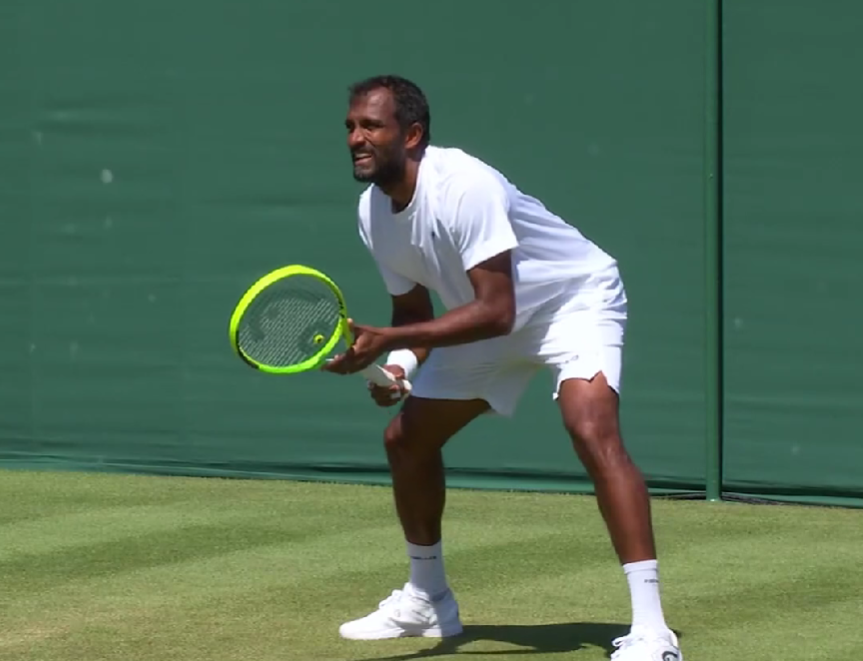
For years, N. Sriram Balaji quietly went about his business on the ATP Challenger Tour, earning respect within tennis circles but rarely making headlines. While Indian tennis continued to celebrate the achievements of doubles legends Leander Paes, Mahesh Bhupathi and Rohan Bopanna, Balaji patiently carved his own path.
That patience has finally paid off.
The 36-year-old Indian has transformed from a Challenger regular into one of the country’s leading doubles specialists, and the turning point has undoubtedly been the French Open. His performances at Roland Garros over the last three seasons have not only elevated his ranking but also changed his own belief about where he belongs in world tennis.
Roland Garros becomes Balaji’s breakthrough stage
The French Open has been the defining tournament of Balaji’s career.
In 2024, he reached the third round of a Grand Slam for the first time, announcing himself as a player capable of competing with the world’s best doubles teams. That breakthrough opened new opportunities, including selection for the Paris Olympics, where he represented India alongside veteran Rohan Bopanna.
Two years later, Balaji returned to Roland Garros with even greater confidence.
Partnering Brazilian Marcelo Demoliner, he produced the finest Grand Slam run of his career by reaching the men’s doubles quarterfinals. It was his maiden appearance in the last eight of a major and a milestone that confirmed his steady rise on the ATP Tour.
The achievement also propelled him to a career-high ATP doubles ranking of World No. 59, placing him among the elite doubles players on the circuit.
A stronger mindset made the difference
Balaji believes his transformation has come less from technical improvements and more from changes in his mindset.
Reflecting on his French Open success, he said:
“I belong to this level.”
The statement summed up years of hard work and growing confidence.
Balaji explained that while every professional player possesses quality strokes, success at the highest level depends on decision-making, execution and mental strength.
Rather than focusing solely on improving his forehand or backhand, he began working on match awareness, movement, body language and tactical execution.
Those changes came under the guidance of former South African doubles specialist Raven Klaasen through the Doubles Dreams of India project. Hours of discussions away from the court became as important as practice sessions, helping Balaji develop into a more complete doubles player.
Wimbledon tells another chapter of the story
While Roland Garros transformed Balaji’s career, Wimbledon has been equally significant in shaping his journey.
In 2018, he created history by becoming the first player from the Indian Army to qualify for the Wimbledon main draw. Serving as a Naib Subedar in the Madras Engineer Group, Balaji balanced military duties with the demands of professional tennis, making his qualification all the more remarkable.
His return to the All England Club in 2025 showed how much his game had evolved.
Partnering Mexico’s Miguel Reyes-Varela, Balaji progressed to the second round of the men’s doubles event. Facing fourth seeds Marcel Granollers and Horacio Zeballos, the Indo-Mexican pair fought hard before losing 4-6, 4-6.
The defeat ended his Wimbledon campaign, but the performance demonstrated that Balaji could compete with one of the strongest doubles teams in the world.
Although Wimbledon did not produce a deep run, it reinforced the progress that had become evident through his performances at the French Open.
A doubles specialist on the rise
Unlike many players who split their focus between singles and doubles, Balaji committed fully to doubles, a decision that has steadily paid dividends.
His partnerships with experienced players such as Marcelo Demoliner, Miguel Reyes-Varela and American veteran Rajeev Ram have exposed him to the highest level of competition and accelerated his development.
Following his French Open quarterfinal, Balaji teamed up with Ram at the ATP 250 Libéma Open, reaching the quarterfinals before reuniting with Demoliner for the grass-court season leading into Wimbledon.
Confident that his serve and aggressive net game suit grass courts, Balaji has set an ambitious target of finishing the season inside the ATP top 50—or even the top 40.
Carrying India’s doubles legacy forward
Indian tennis has long relied on doubles excellence to make an impact on the Grand Slam stage.
From Leander Paes and Mahesh Bhupathi to Rohan Bopanna, India’s greatest successes have often come in doubles. Balaji is now emerging as the latest standard-bearer of that tradition.
His journey has also inspired many within the Indian Army, proving that it is possible to combine military service with success on the global tennis circuit.
The transformation is complete
The French Open did more than deliver the biggest result of Balaji’s career—it transformed the way he views himself as a player.
Instead of hoping to compete with the world’s best, he now expects to.
Although his Wimbledon campaign in 2025 ended in the second round, it complemented the confidence gained from Roland Garros by proving he could challenge elite opponents on another surface. Together, the two Grand Slams have shaped the most successful phase of his career.
For a player who spent years patiently waiting for his opportunity, the French Open became the breakthrough, Wimbledon became another valuable step in his evolution, and the future now looks brighter than ever.