1975 Hockey World Cup: How India Won Its Historic Title
1975 Hockey World Cup: How India Turned Chaos Into a Historic Triumph
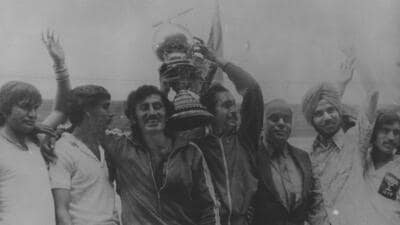
The 1975 Hockey World Cup remains one of the greatest stories in Indian sport. India defeated arch-rivals Pakistan 2-1 in the final at Merdeka Stadium in Kuala Lumpur, winning the World Cup for the first and, to date, only time.
What makes the triumph even more remarkable is what happened before the team reached Malaysia. Administrative infighting, uncertainty over India’s participation and the loss of the original Bombay hosting rights created a turbulent backdrop to a team that eventually produced sporting history.
1975 Hockey World Cup Was Supposed to Be in Bombay
The 1975 Hockey World Cup was originally awarded to India, with Bombay selected as the host city. The tournament was expected to give Indian hockey a chance to celebrate its rich international tradition on home soil.
Instead, a bitter dispute within the Indian Hockey Federation created uncertainty around the organisation of the event. With rival factions fighting for control, the tournament was eventually moved from Bombay to Kuala Lumpur.
Bombay Lost the World Cup, India Won It Anyway
The irony became part of Indian hockey folklore. The country lost the opportunity to host the hockey World Cup, but the team travelled to Malaysia and returned with the trophy.
The administrative crisis had become so serious that the Indian Olympic Association took control of the team’s World Cup participation. The players, meanwhile, had to focus on something much simpler — playing hockey.
The Team That Went to Kuala Lumpur
India entered the 1975 Hockey World Cup having finished third at the inaugural World Cup in 1971 and second in 1973. The 1973 final had ended in heartbreak when the Netherlands defeated India on penalties.
The 1975 squad was captained by Ajit Pal Singh, with experienced players such as Ashok Kumar, Surjit Singh, V.J. Phillips, Harcharan Singh, Michael Kindo and B.P. Govinda forming the core of the team.
Ajit Pal Singh Led India’s Hockey Team
Ajit Pal Singh was more than just the captain. He was the central figure in a team that had to deal with pressure from the tournament itself and the uncertainty surrounding Indian hockey at home.
The squad also had the experience of Balbir Singh Sr. as team manager and G.S. Bodhi as coach. Their guidance helped bring together a group that would eventually create the biggest achievement in Indian hockey history.
India’s Road Through the 1975 Hockey World Cup
India’s campaign in Kuala Lumpur was far from perfect. The team defeated England 2-1 and Ghana 7-0, while drawing 1-1 with Australia.
There was also a 1-2 defeat against Argentina, putting India under pressure in the pool. In their final pool match, India responded brilliantly by beating West Germany 3-1 and securing a place at the top of their group.
India Beat Malaysia in a Dramatic Semi-Final
The semi-final against hosts Malaysia became another defining chapter of the 1975 Hockey World Cup. India faced an enormous home crowd and had to survive a determined Malaysian challenge.
The match went beyond regulation time before India finally secured a 3-2 victory. Aslam Sher Khan, Shivaji Pawar and Harcharan Singh were among the scorers as India reached the final.
India vs Pakistan: The Final That Made History
On 15 March 1975, India faced Pakistan in the final at Merdeka Stadium. Around 50,000 spectators packed the venue, with Indian and Pakistani supporters creating an extraordinary atmosphere.
Pakistan struck first through Mohamed Saeed, who scored in the 18th minute. India had chances before half-time but could not find the equaliser, leaving Pakistan 1-0 ahead at the interval.
Surjit Singh Brings India Back
India returned for the second half with renewed intensity. V.J. Phillips was repeatedly causing problems down the right flank and eventually won a penalty corner after being body-checked.
In the 44th minute, Surjit Singh stepped up and smashed the penalty corner into the net. The score was 1-1, and suddenly the momentum had completely shifted towards India.
The equaliser transformed India’s confidence. The players began attacking with greater purpose, while Pakistan struggled to contain the Indian forwards.
Ashok Kumar Scores the Goal of a Generation
Five minutes after Surjit’s equaliser came the moment that would define the 1975 Hockey World Cup.
Harcharan Singh made progress down the left before finding Phillips. Phillips then moved past a defender and supplied Ashok Kumar, who found space near the top of the circle.
Ashok took the shot. The ball struck the inside of the right post and rebounded into play. Malaysian umpire G. Vijayanathan immediately signalled a goal. India were 2-1 ahead.
Pakistan Protested the Winning Goal
The winning goal became one of the most debated moments in hockey history. Pakistan’s players surrounded the umpire and argued that the ball had not crossed the goal line.
Vijayanathan stood by his decision. He later explained that he was in the line of play and saw the ball hit the inside of the post after crossing the line. The goal remained on the scoreboard.
The controversy could not change the result.
India had taken a 2-1 lead with less than 20 minutes remaining and now had to defend the greatest result in the country’s hockey history.
The Players Behind India’s 1975 Hockey World Cup Win
The victorious India hockey team included a remarkable collection of talent.
The squad featured Ajit Pal Singh, Ashok Dewan, Surjit Singh, Onkar Singh, Leslie Fernandez, Varinder Singh, Shivaji Pawar, Michael Kindo, H.J.S. Chimni, Aslam Sher Khan, V.J. Phillips, Harcharan Singh, P.E. Kalaiah, Mohinder Singh, Ashok Kumar and B.P. Govinda.
Each player contributed differently to the campaign. Surjit’s penalty-corner ability, Phillips’ attacking runs, Harcharan’s movement and Ashok Kumar’s creativity became particularly important during the knockout stages.Behind them stood a defensive unit that survived enormous pressure, with Ajit Pal providing leadership and Dewan guarding the goal.
A Victory Born From Indian Hockey’s Chaos
The greatest irony of the 1975 Hockey World Cup was that the team’s historic victory emerged from one of the most troubled periods in Indian hockey administration.
The internal dispute within the Indian Hockey Federation had threatened India’s preparations and even contributed to the tournament being moved away from Bombay. Yet the players managed to separate themselves from the political turmoil.
Punjab Helped Rebuild the Team
When the administrative situation became uncertain, Punjab Chief Minister Giani Zail Singh offered support for the national team’s preparation.
The players trained at Panjab University in Chandigarh, with Balbir Singh Sr. involved as manager and medical and fitness support provided through PGIMER. That preparation helped create the environment in which the team could focus on performance.
The contrast was striking: administrators were fighting over control while the players were quietly preparing to fight for a World Cup.
Why the 1975 Hockey World Cup Still Matters
India had a long history of dominance in Olympic hockey, but the World Cup had remained elusive. The team won bronze in 1971 and silver in 1973 before finally going all the way in Kuala Lumpur.
The 1975 title therefore completed a remarkable progression — third place, second place and then first place. It remains India’s only men’s Hockey World Cup title.
The Only World Cup Title for India
More than five decades later, the achievement remains unique. India has hosted the World Cup again, including editions in 1982, 2010 and 2018, but has not repeated the success of 1975.
That makes the 1975 Hockey World Cup more than a historical result. It remains the benchmark against which generations of Indian hockey teams have been measured.
From Bombay’s Lost Tournament to Kuala Lumpur Glory
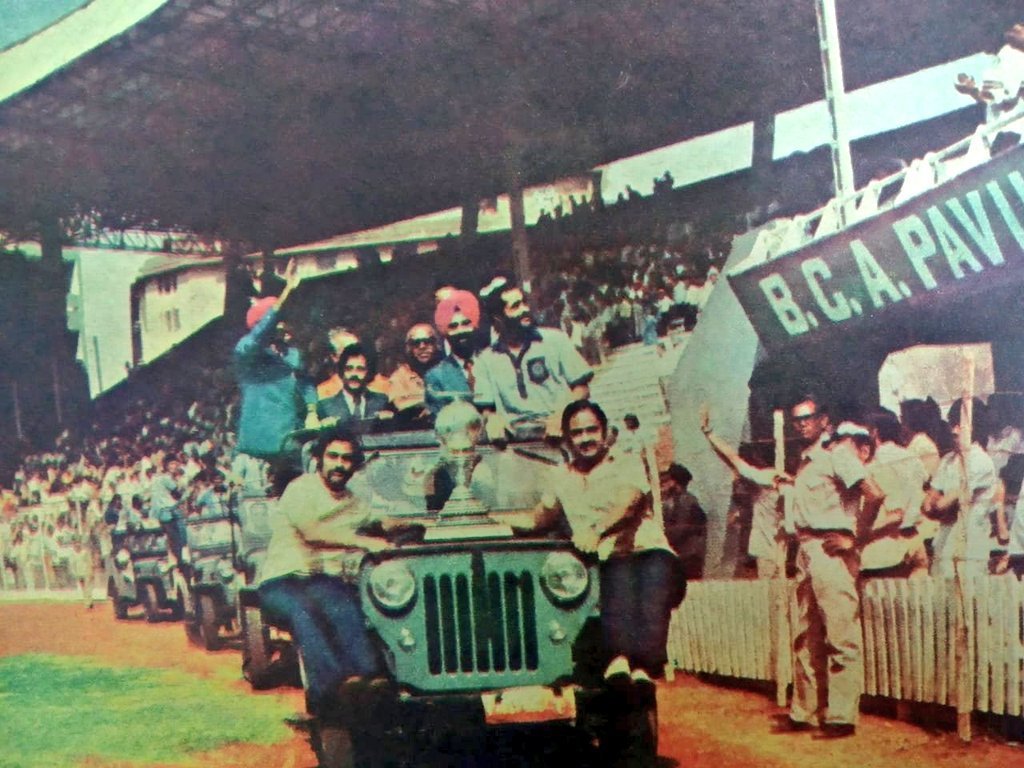
There is a fascinating visual story behind the 1975 Hockey World Cup. Bombay was supposed to host the tournament, and images connected with Bombay hockey can evoke the forgotten beginning of the story.
But the final chapter was written thousands of kilometres away at Merdeka Stadium in Kuala Lumpur. The venue that India ultimately remembers is not the Bombay stadium that was originally planned, but the Malaysian ground where Ajit Pal Singh lifted the trophy.
For your article image, a Bombay/Wankhede historical image can work very well as a “what could have been” visual, provided the caption makes the distinction clear. A caption such as “Bombay was originally selected to host the 1975 Hockey World Cup before the tournament was moved to Kuala Lumpur” would be historically accurate.
The Legacy of India’s Greatest Hockey Triumph
When the story of Indian hockey is told, the names of Ajit Pal Singh, Surjit Singh, Ashok Kumar, V.J. Phillips, Harcharan Singh and their teammates inevitably return to the centre.
They were not expected to dominate the tournament. They had endured administrative uncertainty, a change of venue and a demanding schedule. Yet they defeated Pakistan 2-1 when it mattered most.
The 1975 victory also became part of the country’s sporting memory through radio commentary, newspaper reports and the celebrations that followed the team’s return. The players were welcomed across India, including major receptions in Chennai and Delhi.
The 1975 Hockey World Cup was not simply a tournament that India won. It was a story of a team overcoming uncertainty, administrative turmoil and physical exhaustion to defeat Pakistan on the biggest stage.
At Merdeka Stadium, Surjit Singh’s 44th-minute penalty corner and Ashok Kumar’s 51st-minute winner turned a 1-0 deficit into a historic 2-1 victory. More than 50 years later, that scoreline remains one of the most treasured results in Indian hockey.
Bombay may have lost the opportunity to host the tournament, but India gained something far more enduring. The 1975 team returned from Kuala Lumpur as World Cup champions, and no Indian men’s team has yet repeated that achievement.