Why Everyone Suddenly Wants to Throw a Javelin?
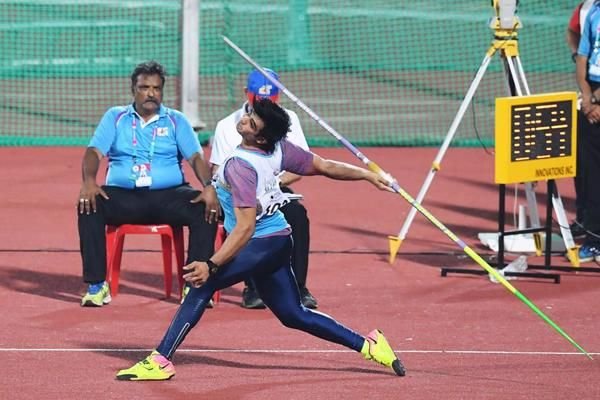
Ask a casual sports fan why Asia is suddenly producing world-class javelin throwers, and you’ll get one answer, every time: Neeraj Chopra. It’s not wrong. But it’s only the visible tip of something much bigger — a shift built on funding decisions, coaching philosophy and a technological revolution that has quietly rewritten how the javelin is thrown across an entire continent. The headline names get the medals. The real story is what’s happening off the runway.
First, The Scoreboard
Before getting into the why, it’s worth understanding the scale of what’s changed. For most of the sport’s history, Asia was an afterthought in javelin. Europe, and particularly the Soviet and Eastern Bloc athletics systems, owned the event through the 1970s, 80s and 90s. Czech legend Jan Železný’s 98.48m world record, set in 1996, still stands untouched today — a reminder of just how dominant that era was.
Compare that to now. Four Asian men have crossed the 90-metre mark, a threshold that separates the elite from the merely excellent:
Arshad Nadeem (Pakistan) — 92.97m, the Asian record, thrown en route to Olympic gold at Paris 2024
Rumesh Tharanga Pathirage (Sri Lanka) — 92.62m, the second-best Asian throw in history, set this June in Rome
Chao-Tsun Cheng (Chinese Taipei) — 91.36m
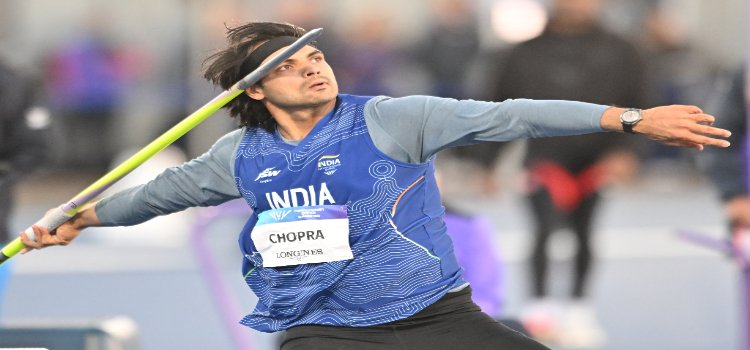
Neeraj Chopra (India) — 90.23m national record
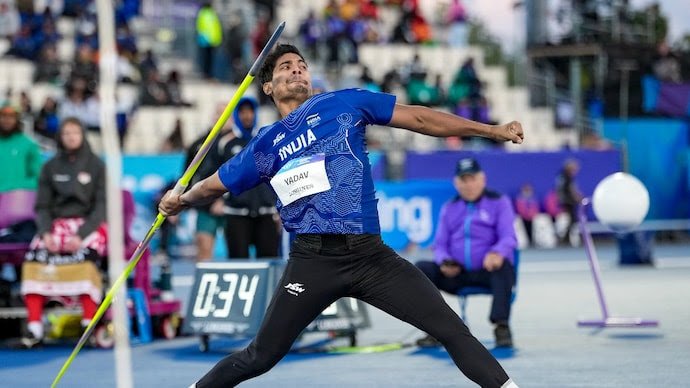
On the women’s side, Japan’s Haruka Kitaguchi ended years of Chinese dominance on the Asian all-time list by becoming the first Asian woman to win a world javelin title, in 2023, before backing it up with Olympic gold the following year. And just this week, 19-year-old Ashish Yadav won javelin silver at the World U20 Championships in Oregon — exactly a decade after Chopra won gold at the same event, making him only the second Indian man ever to reach that podium.
That last detail matters more than it looks. This isn’t a single generational talent anymore. It’s a pipeline. And pipelines don’t build themselves.
So Why Is This Actually Happening?
This is where the real story lives — the part that doesn’t show up in a highlight reel.
1. One Athlete Can Change an Entire Nation’s Psychology
Sport has a strange multiplier effect: a single breakthrough performance can convince millions of people that something previously unthinkable is possible. Before Chopra’s Tokyo gold, javelin was a niche event in India, buried under cricket coverage. Afterwards, it became a national talking point, and kids who had never held a javelin started picking one up. Kitaguchi has said almost the identical thing about Japan — that the sport barely registered domestically until her international results started making headlines. The pattern isn’t a coincidence; it’s a documented phenomenon in sports development. One face becomes the doorway an entire country walks through.
2. Medals Unlock Money — And Money Builds Systems
Here’s the part fans rarely think about: winning international medals doesn’t just create fans, it changes budgets. Once federations and governments see their athletes standing on Olympic and World Championship podiums, the calculus around funding shifts immediately. Suddenly there’s a case for investment in specialised equipment, dedicated training camps, international competition exposure, nutrition programmes and recovery science — resources that simply didn’t exist for javelin throwers a generation ago. Success doesn’t just inspire the next athlete. It pays for their training.
3. Better Coaches, Better Throws
Javelin looks simple from the stands — run, plant, throw — but it is one of the most technically demanding events in athletics, requiring precise run-up speed, hip rotation, shoulder mechanics, release angle and release velocity, all synchronised within a fraction of a second. Small technical corrections at that level produce enormous gains in distance. As Asian federations began investing in specialist throwing coaches rather than general athletics trainers, the technical gap with Europe started closing fast — arguably faster than raw talent alone could explain.
4. The Sports Science Revolution Nobody Talks About
This might be the single biggest hidden factor. A generation ago, javelin coaching relied heavily on a coach’s eye and instinct. Today, throwers can analyse release velocity, release angle, ground reaction forces, run-up speed and fatigue patterns with real-time data, turning what used to be guesswork into precision engineering. Countries that adopted this technology early — Australia’s ThrowCoach system is a well-documented example — have shown how data-driven training can accelerate athlete development in ways that simply weren’t available to earlier generations of throwers, Asian or European.
5. A Home-Field Advantage That Didn’t Exist Before
Rising Asian throwers no longer need a plane ticket to Europe to test themselves against elite competition. Events like the Neeraj Chopra Classic in Bengaluru — India’s first dedicated javelin meet — now give young athletes a genuine high-level stage close to home. It’s how Sri Lanka’s Rumesh Pathirage first got noticed, taking bronze there in 2025 before his breakout 92.62m throw in Rome a year later. A regional circuit means more reps, more exposure and faster development, without the logistical and financial barrier of constant overseas travel.
6. Friendly Rivalry, Not Just Competition
There’s also something less measurable but very real: the relationships between these athletes appear to be pushing standards up rather than creating friction. Chopra has openly praised Pathirage as a friend and credited the depth now emerging among India’s neighbours. Whether or not camaraderie of this kind directly improves performance is hard to prove statistically, but it does appear to be removing a psychological barrier — the idea that a rival’s success threatens your own, rather than proving the standard is reachable.
7. A Population Advantage Hiding in Plain Sight
One more theory worth floating, carefully, because it’s a hypothesis rather than an established fact: South Asia’s enormous population base, combined with widespread participation in sports involving throwing, upper-body power and rotational movement — cricket bowling being the most obvious example — may be producing more raw athletic candidates for javelin than the region historically tapped into. It’s not proof of anything on its own, but paired with better coaching and funding, it’s a plausible piece of the puzzle.
What This Actually Means
None of these factors work in isolation. A star athlete creates belief, belief unlocks funding, funding builds better coaching and sports science, and better systems produce the next athlete — who then becomes the next inspiration. It’s a loop, and once a country enters it, it tends to accelerate rather than plateau. That’s exactly what the numbers suggest is happening across India, Pakistan, Sri Lanka and Japan simultaneously, not sequentially.
Chopra’s Tokyo throw in 2021 will always be remembered as the moment that changed everything. But the deeper truth is that Asia didn’t just get lucky with one exceptional athlete. It built the infrastructure, funding and coaching systems required to turn one golden throw into a genuine continental movement — one that, as of this week, just produced its newest name in Ashish Yadav. The spear has moved east. And the reasons behind it run a lot deeper than one man’s arm.